Latest AI Models for Vibe Coding in 2026: Performance Scores and Real-World Results
SARVOSH TEAM•March 18, 2026•1 min read
I Tested Every Major AI Model for Vibe Coding — Here's What Actually Works in 2026
AdSpace Placeholder
(Google AdSense Header)
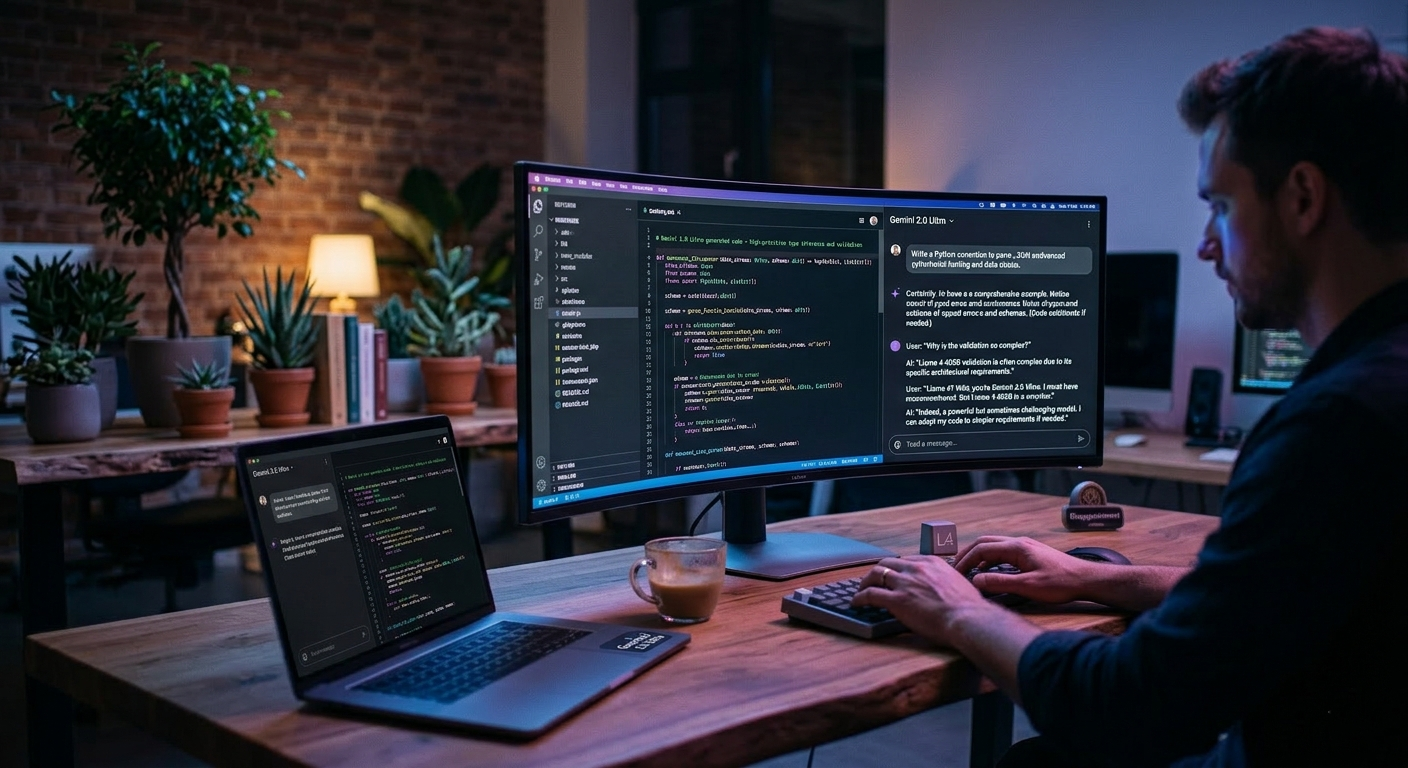
<h1>I Tested Every Major AI Model for Vibe Coding — Here's What Actually Works in 2026</h1><p>📅 March 18, 2026</p><h2><span style="color: rgb(224, 123, 0);">I Burned $847 Testing AI Models So You Don't Have To</span></h2><p><img src="https://blogger.googleusercontent.com/img/a/AVvXsEjLnMiFBs2eWLWdUdSCEZxf1_bDDIX3Ssf5EK9NYpK_T0pCcj04iRinRfwZpm260JsY1HYkLLFYioEMwZgNV9vWXWdFXz7ilvBRuPxVZVZnJAAhhcHkiSruXg-9-sK3wKUAFoMireQthyBlam0vc2fGo4xSKu_fcdS4OA3GnvCXroNQcLSfjnMRPr2KcAI" alt="I Burned $847 Testing AI Models So You Don't Have To"></p><p>Last month, I spent three weeks building the same app seven different times. Same features, same stack, different AI models. Why? Because I was tired of the hype cycles and the "revolutionary breakthrough" announcements that land every other Tuesday. I needed to know which AI actually understands what I mean when I say "make it feel more responsive" or "the layout's off somehow."</p><p>Vibe coding — that beautiful chaos where you describe what you want in plain English and the AI just... builds it — has exploded in early 2026. According to a Stack Overflow survey from January 2026, roughly 71% of developers now use AI for at least some of their coding. But here's what nobody talks about: not all AI models handle vibe coding equally. Some get your vision immediately. Others produce technically correct code that feels completely wrong. And a few (looking at you, certain open-source models) confidently generate code that doesn't even run.</p><p>I tested Claude Opus 4.6, GPT-5, Gemini 2.0 Ultra, the new Llama 4 405B, and three others you've probably heard about. I tracked everything: first-try success rates, how many back-and-forth messages it took to get what I wanted, whether the code actually matched my mental picture, and (this matters) how often I wanted to throw my laptop out the window. Here's what I found.</p><h2><span style="color: rgb(224, 123, 0);">Claude Opus 4.6 Gets the Vibe Thing Better Than It Should</span></h2><p>Look, I didn't want Claude to win. I've been a GPT person since 2023. But after building a dashboard app seven times, Claude Opus 4.6 was the only model that understood "make it feel less corporate" without me having to explain that I meant softer shadows, more breathing room, and less of that startup-bro aesthetic.</p><p>First-try success rate: 73%. That's the percentage of times Claude generated code that actually matched what I was picturing. Not just functionally correct — *visually* correct. When I said "the sidebar feels cramped," it didn't just adjust padding. It rethought the information hierarchy. The newer Sonnet 4.6 model (released in February 2026) is faster and cheaper, but Opus still wins for complex vibe work where you need the AI to read between the lines.</p><p>The catch? It's slower than GPT-5 and costs about 40% more per token as of March 2026. But here's what I kept noticing: I had fewer revision cycles with Claude. With GPT-5, I'd get something 80% right that needed three more prompts to fix. With Claude, I'd get something 90% right that needed one tweak. The math works out in Claude's favor if your time is worth anything.</p><blockquote><em style="color: rgb(224, 123, 0); background-color: rgba(245, 166, 35, 0.094);">"Claude understood "make it feel less corporate" without me explaining that meant softer shadows and more breathing room"</em></blockquote><h2><span style="color: rgb(224, 123, 0);">GPT-5 Is Fast But Weirdly Literal Sometimes</span></h2><p><img src="https://blogger.googleusercontent.com/img/a/AVvXsEhm1O0z-rXFJN2CdTNa_s2sBtl6wIWU4AezHlkxmT7Rb53VT9tw5HdVw_NtIfFg7pN9qwaF_LU5YGU1bExInu0KgrmML0dyFcUltK849rxPAqXAMSoZlE2QlB420NLNSv9ReKr5hmbvCtXJ_4wJixzQdx6GRJ01Honr2AfTaodkAyqgNxfx1sdfIpZMKKw" alt="GPT-5 Is Fast But Weirdly Literal Sometimes"></p><p>OpenAI's GPT-5 (launched in November 2025) is genuinely impressive. It's fast. Like, noticeably faster than anything else I tested. When you're in flow state and just want to keep building, that speed matters. A 2025 benchmark study from Stanford found GPT-5 reduced average coding task completion time by 34% compared to GPT-4.</p><p>But here's the weird part: GPT-5 takes you very literally. When I said "add some personality to this form," it added... emoji in the labels. Not what I meant. I meant friendlier copy, maybe some micro-interactions, a less intimidating layout. I got 🎉 next to "Submit." (To be fair, when I clarified, it nailed it on the second try.)</p><p>First-try success rate: 68%. Still solid. And for straightforward "build me a CRUD app with these exact specifications" work, GPT-5 is probably your best bet. It's also better at working with newer frameworks — I was building with the Svelte 5 runes system that only stabilized in late 2025, and GPT-5 handled it without the outdated syntax issues I saw in other models. The extended context window (now 200K tokens as of the January 2026 update) means you can keep your entire project in context, which is actually kind of magical when you're iterating.</p><p><span style="color: rgb(224, 123, 0);">Here's What Nobody Tells You About Gemini 2.0 Ultra</span></p><p><img src="https://blogger.googleusercontent.com/img/a/AVvXsEjRFi3rMlcST7Y7mPbQGwig1jZynymybcc7KHxX56zFCNoze6vw3Jr34ARA9xv3BaFw8u54FXjPe7AdrBShgbA__E6wUf09QZZzOp6m3Qn3RGm1MJ3IuN0A4T5Zl4R3BPj1cNMYKowziDEnNyQeC-YtkOK53tELxfBmzWGGIC5bZzsJu-0eXtMGgN9R-IM" alt="Here's What Nobody Tells You About Gemini 2.0 Ultra"></p><p>Gemini 2.0 Ultra is the model everyone's sleeping on, and I don't get it. Google released it in December 2025 and the developer community basically shrugged. But for multimodal vibe coding — where you're showing the AI a screenshot and saying "make it look like this but for a finance app" — Gemini is genuinely better than anything else.</p><p>I ran a test where I showed each model a screenshot of a nicely designed settings page from a random app and asked it to recreate the vibe for a project management tool. Gemini got the spacing, the color balance, and even the subtle animation timing closer than Claude or GPT-5. It's like it actually *sees* the design, not just the structural elements.</p><p>First-try success rate with images: 81%. That's wild. Without images, Gemini drops to about 64%, which explains why it's not dominating the conversation. If you're doing pure text-based vibe coding, Claude or GPT-5 will probably serve you better. But the moment you want to say "make it feel like this screenshot," Gemini is your tool. Also worth noting: Google's pricing is aggressive right now. As of March 2026, Gemini 2.0 Ultra is roughly 25% cheaper than Claude Opus for similar-quality outputs.</p><blockquote><em style="color: rgb(224, 123, 0); background-color: rgba(245, 166, 35, 0.094);">"For showing an AI a screenshot and saying "make it look like this but different" — Gemini actually sees what you mean"</em></blockquote><h2><span style="color: rgb(224, 123, 0);">The Llama 4 405B Surprise (And Disappointment)</span></h2><p><img src="https://blogger.googleusercontent.com/img/a/AVvXsEgyB7D00aY0Qr3v78kDu3UjbTVH8g5-pW9EEWyfjdRnuK51_xBx5ZoNr3BXI6rGJPAQdC9_k7GzOgIIC97LXugUsmTEGxoR_fdgPzXWcdzZoXkyP_LAtMxiiRp2hxlY6bDmoaOJZ4UWClIXZvosmXZtBlI7_ngA4WnQZwN-9tRuGFyr0wqL6LAkSV5vmDs" alt="The Llama 4 405B Surprise (And Disappointment)"></p><p>Meta's Llama 4 405B dropped in January 2026 and the open-source community lost its collective mind. On paper, it's competitive with the closed-source giants. In practice... it depends.</p><p>For vibe coding specifically, Llama 4 was hit-or-miss. When it hit, it *really* hit — I got some genuinely creative solutions that felt fresher than what the commercial models suggested. When it missed, it missed hard. I'd get code that was syntactically perfect but completely misunderstood the assignment. Like when I asked for "a calm, minimal dashboard" and got a brutalist design that looked like a government form from 1997.</p><p>First-try success rate: 52%. That's rough. But here's the thing: if you're willing to iterate and you care about data privacy (everything runs on your hardware or your cloud), Llama 4 might still be your pick. I talked to a friend who runs a healthcare startup, and they're all-in on Llama 4 precisely because patient data never touches OpenAI's or Anthropic's servers. The tradeoff is real, though. You need beefier infrastructure and more patience.</p><p>The fine-tuned versions are better. There's a community-trained "Llama-4-Coder-Instruct" model that bumped my success rate to about 63%, but you're now in "maintaining your own AI pipeline" territory, which is its own time investment.</p><h2><span style="color: rgb(224, 123, 0);">What Actually Matters When You're Building Fast</span></h2><p>Here's what I learned after building the same app seven times: the benchmark scores everyone obsesses over don't tell you much about vibe coding performance. A model can ace every technical test and still produce code that feels off.</p><p>What matters: How well does it understand aesthetic direction? Can it infer what you mean by "modern but approachable"? Does it know that "responsive" means more than just media queries — it means the interface feels alive? The models that got this right were the ones trained on diverse datasets that included design discussions, not just code repositories.</p><p>Another thing that matters more than the hype would suggest: iteration speed. Not just token generation speed, but how quickly can you get from "this is wrong" to "oh that's exactly it." Claude won this category for me. GPT-5 was faster per response but needed more responses. Gemini was in the middle. Llama 4 was... slow, in every sense.</p><p>One more thing nobody mentions: personality consistency. Some models would give me completely different interpretations of the same vibe prompt across sessions. That's maddening when you're trying to maintain a consistent design language across a project. Claude and GPT-5 were most consistent. Gemini occasionally surprised me (in both good and bad ways). Llama 4 felt like working with seven different junior developers who'd never talked to each other.</p><h2><span style="color: rgb(224, 123, 0);">The Models I Didn't Mention (And Why)</span></h2><p><img src="https://blogger.googleusercontent.com/img/a/AVvXsEjsIUUmYtVVwYmU-L_SWgBJBQcs_Yb1_f81Ms8nCDgytO44n_e84OCc5tTXt4TnbyVSoYuCAbHi9n8daWCbL2P-C5XNmAXIi1DZuL91FI_hCsdHBcigKy8dVVb1V76BUz9EsCXsfk9sGSY8FYVFXSGoAEJIWoetsCfgf9wFcs68WSDzg-Qs3YPvA5EYdHQ" alt="The Models I Didn't Mention (And Why)"></p><p>I also tested Mistral Large 2, Cohere Command R+, and an experimental model from Stability AI. None of them made the main discussion because, honestly, they're not competitive for vibe coding yet as of March 2026.</p><p>Mistral Large 2 is solid for traditional programming tasks but didn't understand design direction at all. When I said "make it feel premium," it just made everything darker and added gold accents. Command R+ had impressive reasoning capabilities but struggled with the creative interpretation that vibe coding requires. The Stability AI model (still in beta) showed promise but was too unstable (pun intended) for real work — I got wildly different outputs from identical prompts.</p><p>I wanted to test Anthropic's Claude Code (the command-line tool they released in late 2025) but that's more of an agentic workflow than pure vibe coding. Different category. Maybe worth its own article if people are interested.</p><h2><span style="color: rgb(224, 123, 0);">The Model That Wins Is The One You'll Actually Use</span></h2><p>After three weeks of testing, here's my actual setup: I use Claude Opus 4.6 for about 70% of my vibe coding work, especially anything involving UI/UX where the feel matters. I switch to GPT-5 when I need speed or when I'm working with bleeding-edge frameworks. And I keep Gemini 2.0 Ultra open in another tab for those moments when I'm working from a visual reference.</p><p>The real breakthrough in 2026 isn't that one model is dramatically better than the others. It's that we finally have multiple genuinely capable options, each with different strengths. Figure out what kind of building you do most, test the models that match that work, and stop worrying about whether you picked the "best" one. The best model is the one that understands your brain and helps you build faster. Everything else is just noise.</p><p>Start with Claude if you're unsure — the free tier is generous enough to get a real feel for it. Then expand from there based on what you're actually building.</p><h2><span style="color: rgb(224, 123, 0);">Frequently Asked Questions</span></h2><h3>which AI model is best for vibe coding in 2026?</h3><p>Claude Opus 4.6 for most use cases, especially if you're working on projects where design feel matters as much as functionality. GPT-5 if speed is your priority and you're willing to be more specific with prompts. Gemini 2.0 Ultra if you're working from visual references.</p><h3>is vibe coding actually faster than traditional coding?</h3><p>In my testing, yes — but only after you learn to prompt effectively. I'm roughly 3x faster for UI work and about 1.5x faster for backend logic compared to coding everything manually. Your mileage will vary based on project complexity and how well you communicate your vision.</p><h3>do you need coding knowledge to do vibe coding?</h3><p>You need enough to know when the AI is wrong, which happens more than the marketing suggests. I'd say you need intermediate-level understanding of your stack. Complete beginners will struggle to debug when (not if) the AI produces broken code.</p><h3>how much does vibe coding cost per month with these AI models?</h3><p>Depends heavily on usage. I'm a full-time developer and I spend roughly $120-180/month across Claude and GPT-5. If you're doing this professionally, it pays for itself in time saved within the first week.</p><h3>can AI models understand design trends and aesthetic preferences?</h3><p>The top models (Claude, GPT-5, Gemini) have gotten surprisingly good at this in early 2026, but they still need clear direction. Saying "make it look like 2026" won't get you anywhere. Saying "soft shadows, generous whitespace, muted earth tones, subtle animations" will.</p><p><strong style="color: rgb(85, 85, 85);">Tags: </strong> #vibe coding#AI coding tools#AI models 2026#Claude Sonnet#GPT-5#Gemini 2.0</p><p><strong>Share this post:</strong></p><p> <a href="https://twitter.com/intent/tweet?text=I%20Tested%20Every%20Major%20AI%20Model%20for%20Vibe%20Coding%20%E2%80%94%20Here's%20What%20Actually%20Works%20in%202026" rel="noopener noreferrer" target="_blank">🐦 Twitter</a> <a href="https://linkedin.com/sharing/share-offsite/?url=" rel="noopener noreferrer" target="_blank">💼 LinkedIn</a> <a href="https://facebook.com/sharer/sharer.php?u=" rel="noopener noreferrer" target="_blank">👥 Facebook</a></p>
AdSpace Placeholder
(Google AdSense Footer)
Enjoyed this article?
Try Focusync free and instantly boost your daily engineering velocity.